

The Unlucky Prince
 Will May
Professor of Modern and Contemporary Literature
I work on modernism's literary networks.
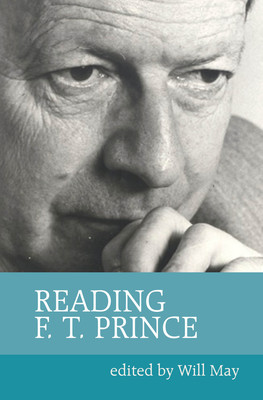
In last week’s F.T. Prince Memorial Lecture, now in its 14th year, Denise Riley began her talk by turning to ‘The Yard’, an unpublished poem by F.T. Prince she had come across in the appendix of an unpublished thesis by Bevil Luck. Lucky for her and for us, she noted, that Bevil’s scholarship had brought so much to light about Prince’s work; it brought her the right poem at the right time.
Prince’s poetry—and much of his own account of his life as a poet—seemed less blessed by serendipity. F.T. Prince took up his post as Head of Department in English at the University of Southampton in the 1950s, retiring in 1974. His first collection of poems was published with Faber in 1938 and he later found success with the poem ‘Soldiers Bathing’ which became one of the few anthology pieces from the Second World War. However, his poetic output after taking up his university post was reluctant, secretive, and often only cajoled into print by avid readers who happened to have set up their own small presses. Few of his students studying Milton with him knew he was a poet - perhaps the postwar period not only fostered village Miltons, but hid others under visible endeavours of scholarly commentary: ‘a don must edit Milton till he dies’1 offered a villanelle from the 1960s. In person, as the Australian poet Kris Hemensley notes, it was difficult to find a way to speak across generations: when Prince asks him to set up a meeting with some ‘younger poets of [your] advocacy’, including John Hall and John Riley, Hemensley remembers an ‘unwillingness to connect’ and an evening ‘flecked with irritation’.2
Prince’s poetry was particularly drawn to those who live too long, or who find themselves, for whatever reason, out of step. ‘The Old Age of Michelangelo’ summons a master painter who has become ‘the sad sordid slave, the old man’; while ‘A Last Attachment’ recalls Laurence Sterne’s belated discovery of love, when old age has made him both ‘wiser / And more foolish’. In ‘The Yüan Chên Variations’, the Chinese poet Po Chü-i mourns his mentor, while his vivid dreams of Yüan Chên find him awaking to ‘nothing at all’. During the red 1930s, Prince wrote love lyrics and dramatic monologues rather than the politically-engaged poetry of his Oxford contemporaries, W.H. Auden and Stephen Spender; during the avant-garde British Poetry Revival, Prince wrote an extended verse biography, Memoirs in Oxford (1970).
Yet Prince’s afterlife seemed more drawn to the propitious. In 2011, when I had been in post at Southampton for three years, my colleague Peter Middleton showed me an email he had received from Peter Robinson at the University of Reading, wondering what we might be doing to celebrate the centenary of ‘your old distinguished professor, F.T. Prince’. This was my very first knowledge of Prince’s existence, either as a former Head of Department at Southampton, a significant twentieth-century poet, a Milton scholar, or as someone who might be about to have a centenary.
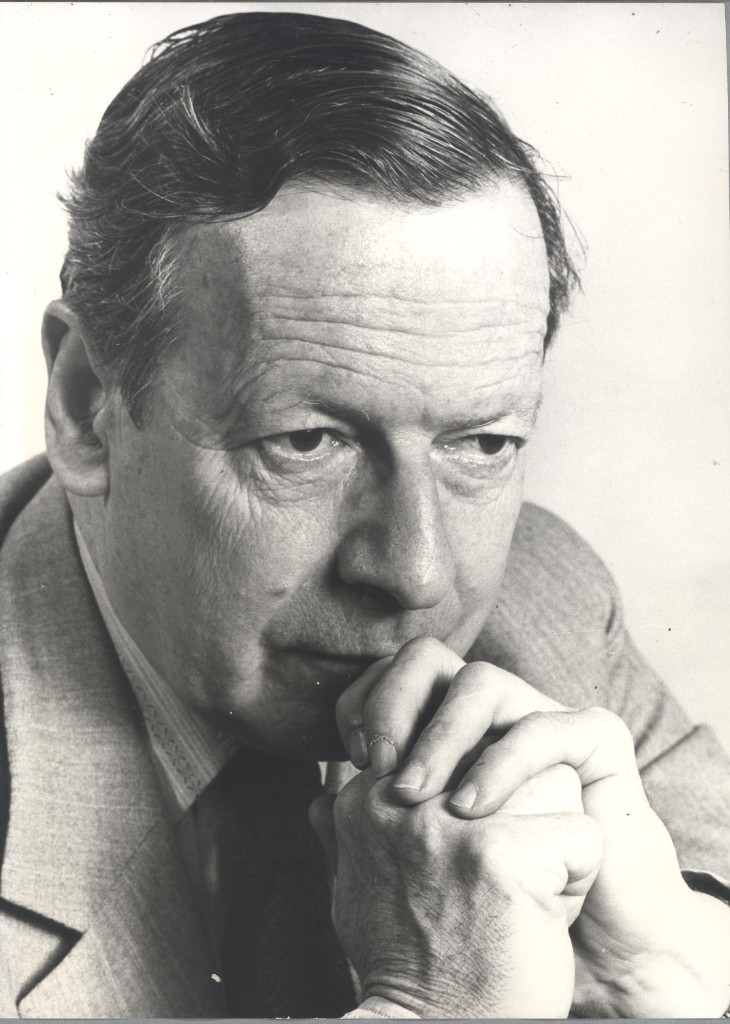
Several meetings and a planned symposium later, we all wondered about the possibility of an exhibition to coincide with the centenary. Although Prince had left no personal archival trace in Southampton, I wrote to Chris Woolgar, then Head of Special Collections at the Hartley Library, about what we might borrow from elsewhere. His understated responses informed me they did, in fact, have an important collection of Prince’s papers, which he had given to them 20 years ago with a provision that they not be made available until the start of 2012: ‘as we are at that point, we will now be opening the material’.
This was a time before Outlook emoticons, so I have no written record of my response on reading this, but it’s fair to say it’s one of the most surprising work emails I’ve ever received. Among these 20 boxes were letters to Prince never before made public from T.S. Eliot, E.M. Forster, Susan Howe, John Ashbery, Donald Davie, Lee Harwood, and W.H. Auden. The archive tells us a story of a poet who—far from being obscure—had a significant influence as a (reluctant) mentor on generations of Anglo-American poets. Those hidden letters went on to find an audience through an exhibition, an edited collection of essays, a funded PhD, workshops, and a distinguished annual lecture series. The past FT Prince lectures have been delivered by scholars and poets including Malika Booker, Andrew McMillan, Anthony Joseph, TJ Dema, and Kei Miller.
Prince’s embargo on his archive—not just access to the archive, but even the public knowledge of its existence—is very like a man who is known to be drawn to privacy. The practice of imposing time-based restrictions on literary papers is not unusual; TS Eliot’s correspondence with Emily Hale famously stipulated an embargo that would last until fifty years of the death of whichever amongst them survived longer. But setting out a condition that the papers are ‘unveiled’ only a hundred years to his own birth does seem uncommon. It may seem that a poet known to be averse to promoting his poetic career during his lifetime had an unexpected preoccupation with posterity.